Difference between isset, empty and null.
http://hi.baidu.com/cpuyz/blog/item/e18780ef1aabb4e8cf1b3e6e.html
http://seanphpbook.blogspot.com/2009/10/php-empty-isset-php.html
2012年5月15日 星期二

TED: Gary Kovacs: Tracking the trackers
良心建議可以實驗看看,你最多只會浪費十幾分鐘,對我來講,這次體驗徹底改變了我對網路的看法。
(三分鐘,Firefox 是一個開源系統的瀏覽器,就像 IE,Chrome一樣)
步驟二, 去下載 Collusion 套件 http://www.mozilla.org/en-US/collusion/
(三分鐘,安裝後,瀏覽器的右下方會出現一個黑體小紅圓圈;假如沒有的話,
你可以在檢視>工具列>附加元件工具列;按"Ctrl+/"就會出現了)
步驟三,把這一個附加元件的全功能開啟,如此一來,每一次你的動作被瀏覽器紀錄的時候,他就會發出聲音。當你的資料發給第三方的時候,就會有頁面跳出。有一點煩人,但是絕對值得開啟試試看。
(一分鐘;到工具>附加元件>點選Collusion> 勾選"Check to hear sound"及"Always Show Graph")
步驟四,開啟你的音箱,把頁面右下方的小紅圈叫出來,在Firefox上做任何你習慣的事情;寫部落格,收 E-mail,看一個 TED 影片。
你會發現在 Collusion 的監視頁面中,有一大堆的圈圈會冒出來,這就是正在收集你的動作的第三方網站。背景音,你會聽到很多"喀嚓,喀嚓"的聲音,那是你每次被設置一個 Cookie 之後所造成的聲音。
可以試試看開啟色情網站,你絕對可以體會這些網站有多少個外掛系統。
試試看開啟 TED.com 的頁面,會有一大堆的第三方程式,才發現這裡的監控 Cookie 可能還比色情網站還更多。在表中,你還可以看到這些網站,與其他的網站正在共同分享你的資料。而這一個頁面,就算閒置的時候,也還是會持續的設置 Cookie。
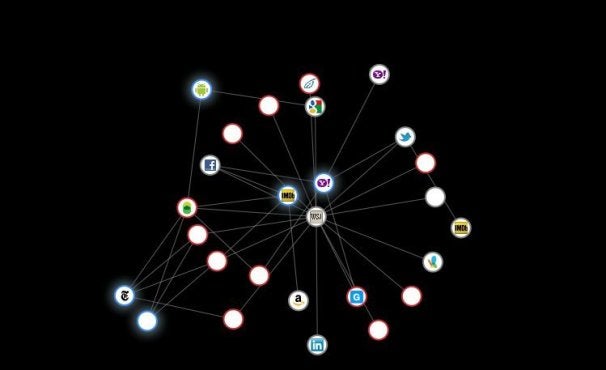
必須要澄清的,是並非所有的 Cookie 都是壞事。Gary Kovacs 也提到,是因為這些 Cookie 才讓很多服務變的更客製化。只是,底線就是:我們應該知道我們被曝露什麼。
I actually recommend everyone to give this a trial:
1. Go install Firefox http://www.mozilla.org/zh-TW/firefox/new/
2. Install collusion http://www.mozilla.org/en-US/collusion/
3. Click on the bottom right to see the monitoring page, or go to option to enable the voice and pop-up window.
4. Try to perform a web activity, such as posting an article, and just see what happens.
2012年5月14日 星期一
TED:JP Rangaswami: Information is food
Very interesting comparison, first that our brain tissue are as valuable as our digestion tissue (Though I don't fully get why). And then, the idea that information can absorb information as absorbing food. This is related to the talk by Eli Pariser; comparing good information and bad information as to vegetable and junk food.
So, if information is nutrition, what can be what? Following is my short list:
- Gossip is like fat.
- Provocative thought is like ?.
- ? is like vegetable.
- ? is like water.
- Poem is like ?
- Essay is like ?
- News is like ?
- Bloomberg is like ?
- Myth is like ?
- Story is like ?
2012年5月13日 星期日
TED: Eli Pariser The Filter Bubble
A short but interesting talk about the filter bubble problem. We will keep seeing what we like, not what is important to us. We don't get to see the edit out, and we can't get to know what we don't know. Think of this as an office setting, nobody want to deliver the bad but important news to the boss.
But what is the solution? One should make it a rule to select random things to read every each period of time? Add one stranger friend every month or so?
This result won't be filter out, but we will have a lot of noise.
We should get important result that is un-filtered. Then the question lies on, how to you define what is important? If you think of it, my running list of possible assumption of what importance consist of:
- What you like. Define as your past preference.
- What is most popular. Define as the most viewed, or the most mailed article.
- The probability that the event is going to affect you. Define by language you are using, and the location where you are.
And after this list, I find an interesting fact: all this metrics are already built in to the current algorithm. And if we consider that the engineers of search engine have done their work, so should it be already built-in. So either there is something else in the def. of importance.
If I phase the problem in another way. Assuming that I am head of office at Microsoft, all my colleague are senior people who have very similar mindset than mine. My junior internet is writing to me, to tell me the importance of internet. My problem will be: how can I know that this memo is important?
If I can constantly advice my future self, asking him about what I wished I know now. How can I replicate this process?
Somehow I feel this problem is related to what Kevin Kelly post about why young people know how to use the internet:
The Web is being run by 20-year-olds because they can afford to waste the 56 hours it takes to become proficient explorers. While 45-year-old boomers can't take a vacation without thinking how they'll justify the trip as being productive in some sense, the young can follow hunches and create seemingly mindless novelties on the web without worrying about whether they are being efficient. Out of these inefficient tinkerings will come the future.
Alternative:
- Finding people/friend who strongly disagree with you; offer you an alternative view of things.
- A filter with good content that only feed you with vegetable, but not garbage.
- People that you admired.
- People who risk something to tell you this message. People who strongly disagree with you. People that are willing to bet on it. People who put their name on it.
- Follow industry/society early adopter, defined as elite, or young people.
Possible action item.
- Join other people's activity.
- Take advice from 10 un-related people about major decision.
- Keep a very vast network of friend.
More following on failure
It is interesting that these people were criticized exactly were they are outstanding.
http://www.creativitypost.com/psychology/famous_failures
http://www.creativitypost.com/psychology/famous_failures
TED: David McCandless: The beauty of data visualization
Further follow up
- Check Blog: "Information is beatiful"
- Check about the Google interactive tool he has published.
- Book: "Information is Beautiful/The Visual Miscellaneum"
- Guardian Data Blog
-> Designing Visualization tool for Telephone bill
Thought:
He has been an programmer.
"Data is the new soil"
Information design is all about knowledge compression. (Can the process be replaced by computer?)
Question: Whether it is possible to scale the process of data visualization; like a template? Such as visual.ly http://create.visual.ly/
- Check Blog: "Information is beatiful"
- Check about the Google interactive tool he has published.
- Book: "Information is Beautiful/The Visual Miscellaneum"
- Guardian Data Blog
-> Designing Visualization tool for Telephone bill
Thought:
He has been an programmer.
"Data is the new soil"
Information design is all about knowledge compression. (Can the process be replaced by computer?)
Question: Whether it is possible to scale the process of data visualization; like a template? Such as visual.ly http://create.visual.ly/
訂閱:
文章 (Atom)